
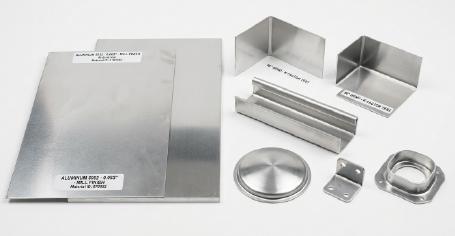
Aluminum 5052 is the strongest non-heat-treatable aluminum alloy. It provides excellent corrosion resistance, workability, and formability — popular for marine and chemical environments.
Key performance characteristics of Aluminum 6061-T6, the most commonly machined temper for this alloy.

Tensile Strength (UTS)
310 MPa45,000 PSI

Yield Strength
276 MPa45,000 PSI

Elastic Modulus
69 GPa10,000 KSI

Elongation at Break
12%In 50 mm gauge length

Density
2.70 g/cm³45,000 PSI

Thermal Conductivity
167 W/(m·K)At 25°C (77°F)

Max Service Temp
200–300°C392–572°F

Hardness (Brinell)
95 HBT6 temper condition
Comprehensive property data for Aluminum 6061-T6, the standard temper for structural CNC-machined components.


How Aluminum 6061 behaves on the shop floor — tooling, speeds, and practical guidance for optimal results.
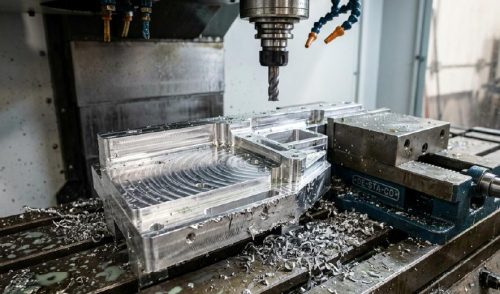
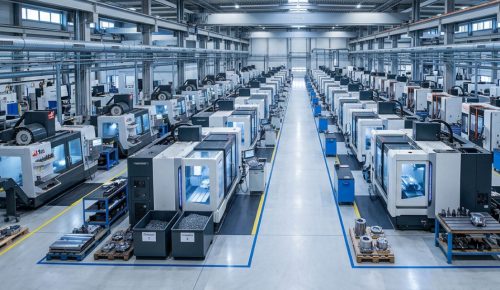
Aluminum 6061 is one of the easiest alloys to machine, offering excellent chip formation and surface finish quality. Its moderate hardness in T6 temper provides good dimensional stability without excessive tool wear.
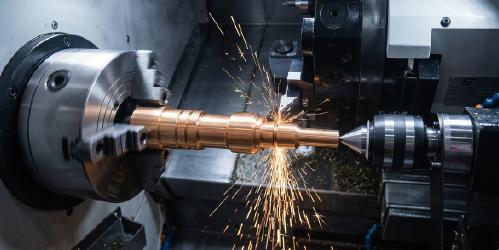
Use sharp carbide tools with TiN or TiAlN coatings for best results. Climb milling is preferred to reduce tool deflection and achieve tighter tolerances. Coolant application is critical to dissipate heat and improve chip evacuation — especially at higher speeds.
MACHINABILITY RATING
ExcellentRelative to free-cutting brass
CUTTING SPEED (MILLING)
200–500 m/minCarbide tooling, T6 temper
FEED RATE (MILLING)
0.05–0.20 mm/toothAdjust per tool diameter
SURFACE FINISH
Ra 0.4–1.6 µmAchievable with fine passes
TOOL WEAR RATE
LowExtended tool life vs. steels
CHIP CONTROL
ModerateLong chips — use chip breakers
Aluminum 6061 is the second most popular aluminum alloy after 6063, trusted across demanding industries worldwide.


How Aluminum 6061 stacks up against commonly compared aluminum alloys to help you select the optimal grade.
|
This Grade 6061-T6 |
7075-T6 | 6082-T6 | 5083-H116 | 2024-T3 | |
|---|---|---|---|---|---|
| Tensile Strength | 310 MPa | 572 MPa | 340 MPa | 317 MPa | 483 MPa |
| Yield Strength | 276 MPa | 503 MPa | 310 MPa | 228 MPa | 345 MPa |
| Elongation | 12% | 11% | 10% | 16% | 18% |
| Hardness (HB) | 95 | 150 | 100 | 75 | 120 |
| Density (g/cm³) | 2.70 | 2.81 | 2.71 | 2.66 | 2.78 |
| Machinability | Excellent | Good | Good | Fair | Good |
| Corrosion Resistance | Excellent | Fair | Excellent | Excellent | Fair |
| Weldability | Excellent | Poor | Excellent | Good | Poor |
| Heat Treatable | Yes | Yes | Yes | No | Yes |
| Relative Cost | Low | High | Low–Med | Medium | Medium |
| Best For | General purpose | High-stress aero | Structural | Marine | Fatigue-critical |
Aluminum 6061 accepts a wide range of surface treatments. Here's how each finish performs with this alloy.
Upload your CAD files and receive a detailed quote within 6 hours. From rapid prototypes to full production batches — tolerances as tight as ±0.005mm.
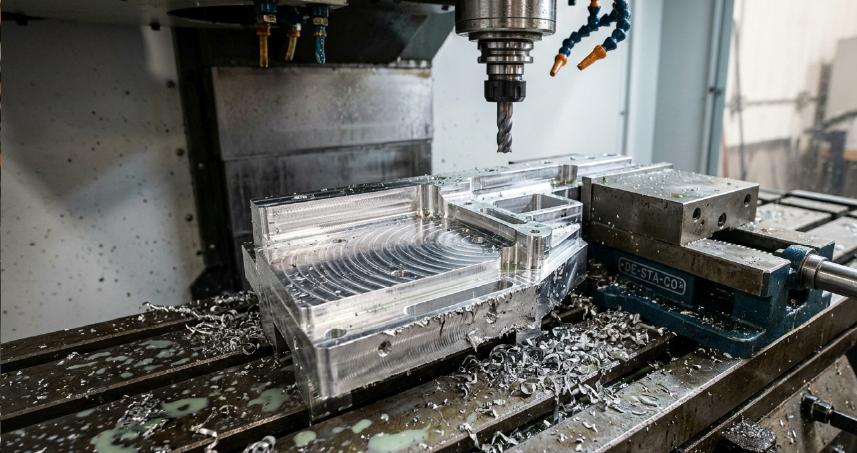
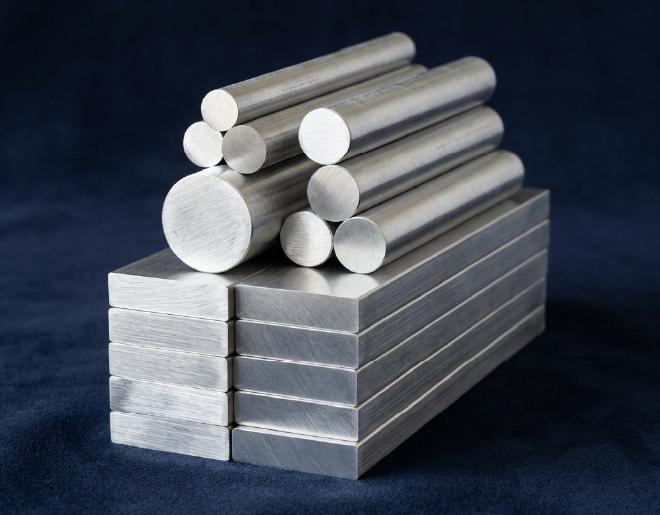
Aluminum 6061 is a versatile alloy widely used in aerospace, automotive, and industrial applications. It is easily machinable in specific conditions and often formed into bars and profiles through extrusion.
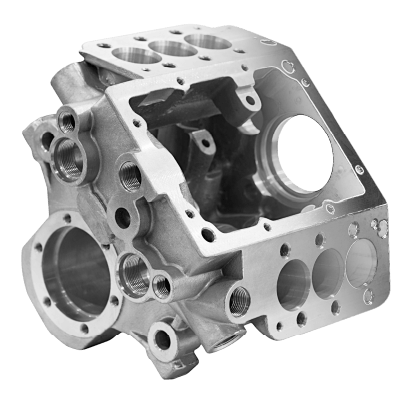
Aluminum 6061 is the workhorse of CNC machining. Its balanced combination of strength, corrosion resistance, and workability makes it a top choice for engineers across industries. In the T6 temper condition, 6061 offers a tensile strength of 310 MPa — strong enough for structural applications while remaining significantly lighter than steel.
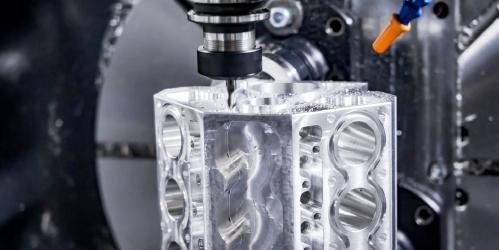
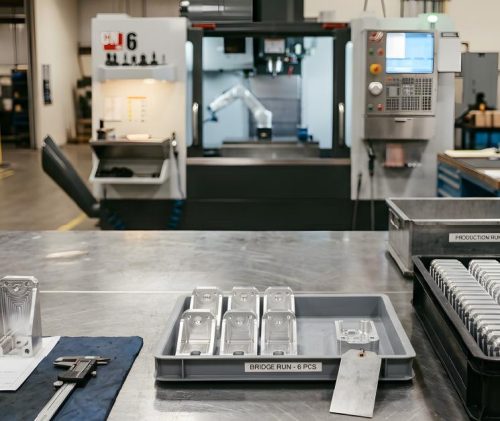
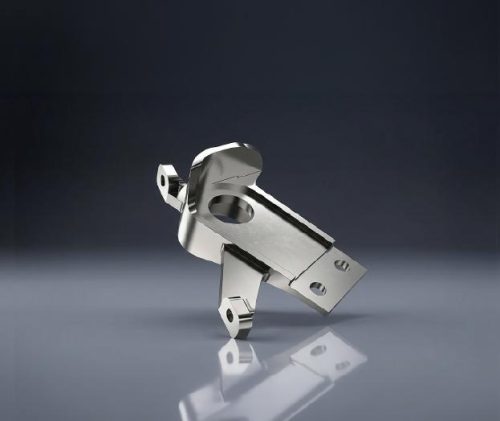
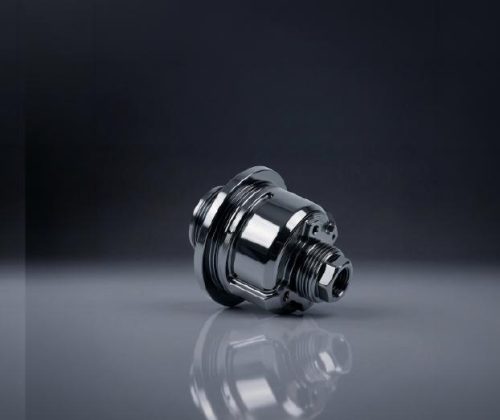
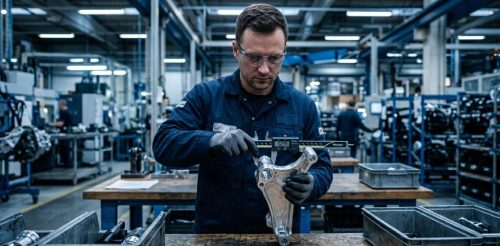
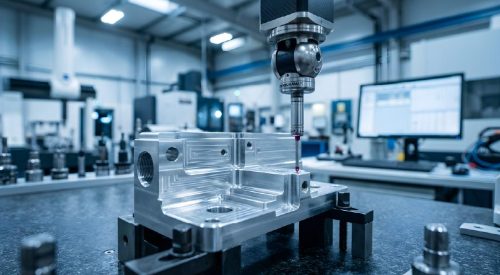
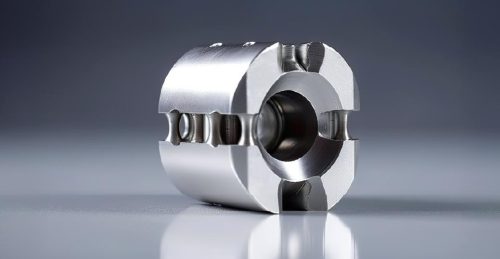
Its excellent machinability means faster cycle times, reduced tooling costs, and superior surface finishes straight off the machine. Whether you’re producing precision aerospace brackets, automotive housings, or consumer electronics enclosures, 6061 delivers consistent results with tight tolerances down to ±0.005mm.
Aluminum 6061 is the workhorse of CNC machining. Its balanced combination of strength, corrosion resistance, and workability makes it a top choice for engineers across industries. In the T6 temper condition, 6061 offers a tensile strength of 310 MPa — strong enough for structural applications while remaining significantly lighter than steel.
Its excellent machinability means faster cycle times, reduced tooling costs, and superior surface finishes straight off the machine. Whether you’re producing precision aerospace brackets, automotive housings, or consumer electronics enclosures, 6061 delivers consistent results with tight tolerances down to ±0.005mm.
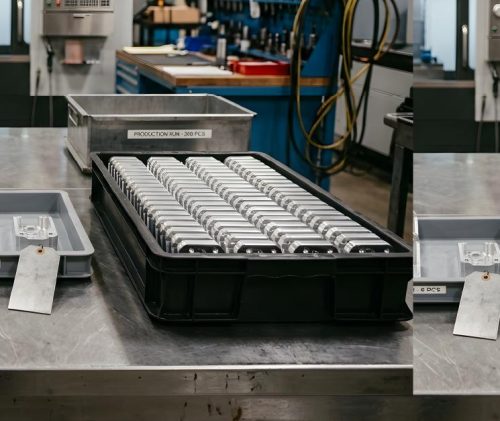
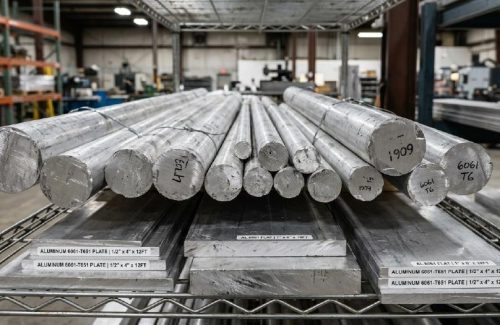 Raw Stock
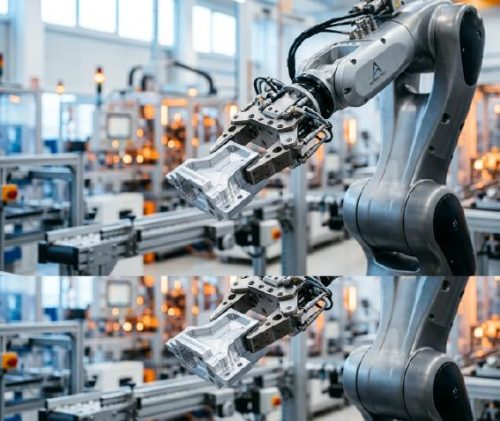
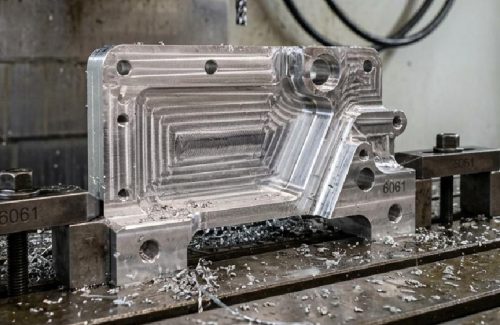 CNC Machined
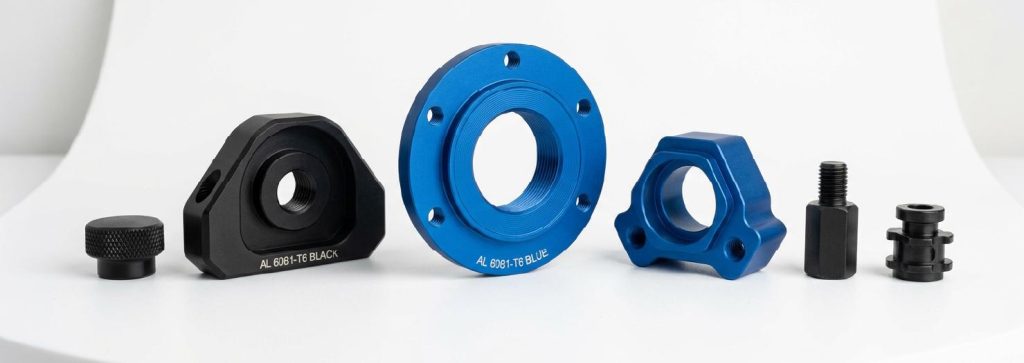 Finished Parts
Raw Stock
CNC Machined
Finished Parts
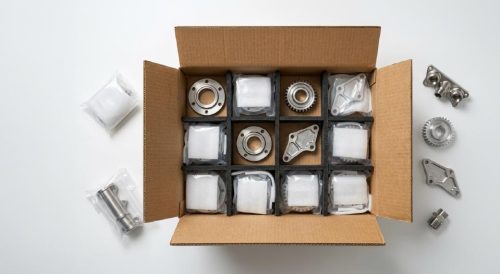
Finished Parts
Raw Stock
CNC Machined
Finished Parts
Common questions from aerospace procurement and engineering teams.

Get started with a stable process and controlled quality. Let's discuss your project.