Anodizing

An electrochemical surface finishing process that creates a durable, corrosion-resistant oxide layer on aluminum and other metals — enhancing hardness, appearance, and long-term performance.
  • Type I–III Anodizing Types
  • 5–80µm Coating Thickness
  • MIL-A-8625 Standard Complian

The Anodizing Process

Anodizing converts the metal surface into a controlled oxide layer through an electrochemical process, producing a finish that is integral to the substrate — not applied on top.

  • 01

    Cleaning & Prep

    Parts are degreased, etched, and de-smutted to remove contaminants and ensure uniform surface chemistry before processing.

  • 02

    Electrolyte Bath

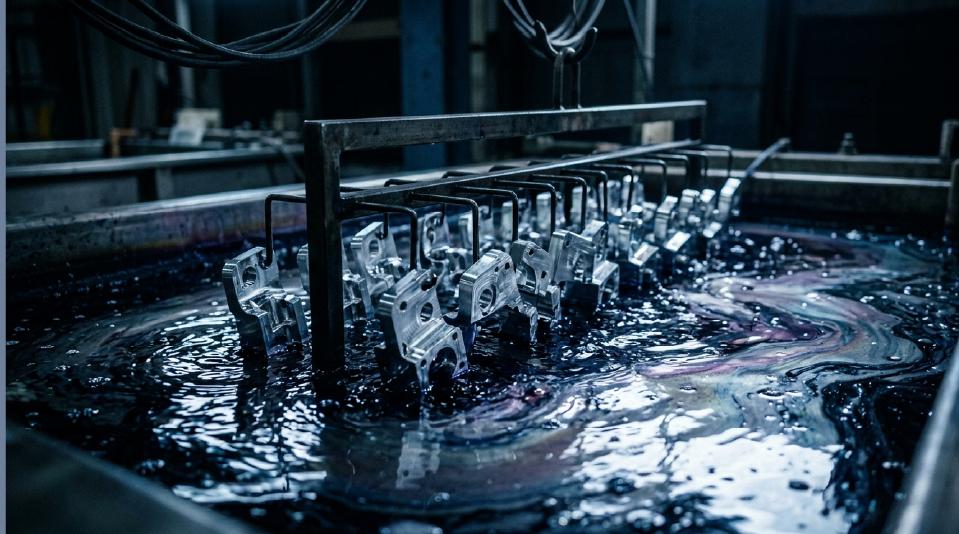
    Parts are submerged in a sulfuric or chromic acid electrolyte solution, where they serve as the anode in an electrical circuit.

  • 03

    Oxide Formation

    Direct current drives oxygen ions into the aluminum surface, growing a uniform aluminum oxide layer with controlled thickness.

  • 04

    Dyeing (Optional)

    The porous oxide layer absorbs organic or inorganic dyes, enabling a wide range of stable, fade-resistant colors for decorative parts.

  • 05

    Sealing

    Hot water, nickel acetate, or steam sealing closes the porous structure, locking in color and maximizing corrosion resistance and durability.

What Anodizing Delivers & Where to Be Mindful

Understanding both the strengths and constraints of anodizing ensures you make the right finishing decision for your application.

  • Key Benefits

    • Exceptional corrosion resistance — oxide layer is chemically stable and does not peel or flake
    • Increased surface hardness — up to 70 HRC equivalent on hard-anodized parts, improving wear resistance
    • Stable color options — dyed finishes resist UV fading for long-lasting aesthetics
    • Electrical insulation — anodized layer is non-conductive, useful for electronic housings
    • Improved paint adhesion — porous oxide layer acts as an excellent primer for secondary coatings
    • Environmentally friendly — produces minimal hazardous waste compared to plating processes
    • High temperature tolerance — anodized surfaces withstand heat without degradation
  • Limitations to Consider

    1. Primarily for aluminum — not all metals can be anodized; steel, copper, and most alloys are incompatible
    2. Color matching challenges — batch-to-batch color consistency can vary, especially with different alloy compositions
    3. Dimensional change — the oxide layer grows both inward and outward, affecting tight tolerances (typically 50% growth each direction)
    4. Surface imperfections amplified — anodizing highlights scratches, tool marks, and grain structure rather than concealing them
    5. Brittle on thick layers — hard anodizing can reduce fatigue strength on thin-walled parts
    6. Limited dark colors on some alloys — high-silicon or high-copper alloys may not accept deep black or vibrant colors evenly

Appearance & Protection Results

Anodizing delivers both functional protection and premium aesthetics, with results that vary by type and processing parameters.

  • Corrosion Protection

    Salt spray resistance exceeding 336 hours (Type III). The integral oxide barrier shields against moisture, chemicals, and environmental exposure without peeling.

  • Color & Aesthetics

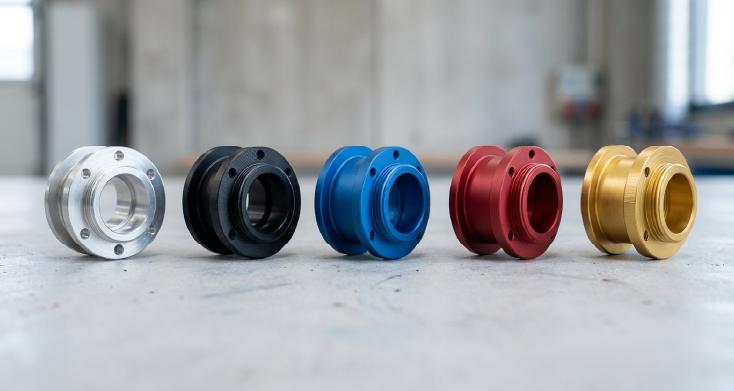
    Wide palette from natural silver to black, blue, red, gold, and custom colors. Dyed finishes are UV-stable and maintain vibrancy for years in outdoor environments.

  • Surface Hardness

    Hard anodizing (Type III) achieves 60–70 HRC equivalent hardness, providing excellent abrasion and scratch resistance for high-wear components.

  • Electrical Insulation

    The aluminum oxide layer provides dielectric breakdown voltage up to 600V for standard anodizing, making it ideal for electronic enclosures and insulating components.

  • Thermal Stability

    Anodized surfaces withstand continuous temperatures up to 2,000°C (melting point of Al₂O₃) — far exceeding the base aluminum's limits.

  • Surface Finish Quality

    Achieves matte, satin, or bright finishes depending on pre-treatment. Surface roughness as low as Ra 0.4µm for precision cosmetic applications.

Anodizing Types Compared

Type I Chromic Acid Anodizing Type II Sulfuric Acid Anodizing Type III Hard Anodizing
Thickness 0.5 – 7 µm 5 – 25 µm 25 – 80 µm
Hardness Moderate Good 60–70 HRC
Corrosion Resistance Good Very Good Excellent
Color Range Limited (clear/gray) Full spectrum Dark gray to black
Best For Aerospace, fatigue-critical parts Consumer products, enclosures Wear surfaces, military, industrial

Suitable Materials for Anodizing

Anodizing is primarily designed for aluminum and its alloys, though a small number of other metals can also be anodized under specific conditions. The alloy composition directly impacts coating quality, color consistency, and corrosion performance.

For best results, choose alloys with low copper and silicon content. Wrought alloys generally produce more uniform and visually consistent finishes than cast alloys.

Get Instant Quote
  • 6061 Aluminum
    Excellent anodizing response. Produces consistent, uniform coatings with vibrant color acceptance.
    Recommended
  • 6063 Aluminum
    Ideal for decorative anodizing. Bright, smooth finish with excellent dye uptake.
    Recommended
  • 7075 Aluminum
    Good anodizing response for structural parts. Higher zinc content may slightly yellow clear coatings.
    Compatible
  • 5052 Aluminum
    Good corrosion resistance base. Produces a slightly grayish tone in clear anodizing.
    Compatible
  • 2024 Aluminum
    High copper content creates yellowish tint. Color consistency can be challenging; often used with Type I.
    Limited
  • Titanium
    Can be anodized for color marking and improved biocompatibility. Produces interference colors (no dyes needed).
    Specialty

Typical Applications

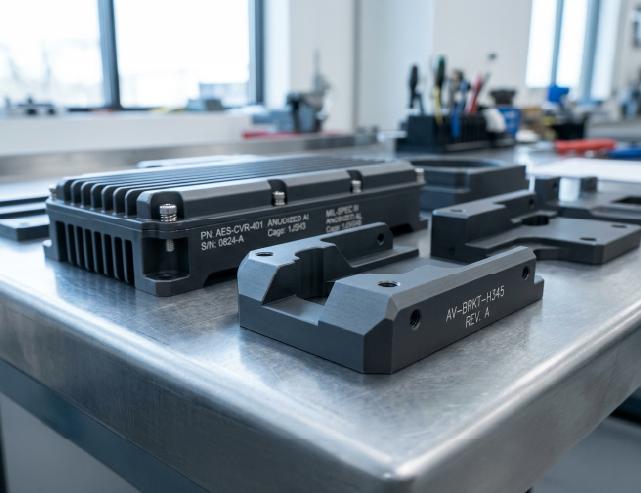
Anodizing serves industries demanding both functional performance and visual quality — from mission-critical aerospace hardware to everyday consumer electronics.

Design & Tolerance Notes

Designing for anodizing requires understanding how the oxide layer affects dimensions, surface quality, and functional features. Follow these guidelines for optimal results.

  • Account for Dimensional Growth

    The anodic layer grows approximately 50% into and 50% out from the original surface. For a 25µm coating, expect ~12.5µm dimensional increase per side. Size critical features accordingly.

  • Choose the Right Alloy

    6000-series alloys (6061, 6063) produce the most uniform, cosmetically consistent results. Avoid high-silicon casting alloys for decorative applications.

  • Prepare Surface Finish First

    Anodizing amplifies surface imperfections. Machine or polish to the desired finish quality before processing — Ra ≤ 0.8µm recommended for cosmetic parts.

  • Design Uniform Wall Thickness

    Uneven material thickness causes uneven current distribution, resulting in inconsistent coating thickness and potential color variation across the part.

  • Plan for Masking & Racking

    Identify areas requiring masking (threaded holes, mating surfaces, electrical contacts). Include racking points in the design for even electrolyte flow.

  • Specify Color Tolerance

    Provide a Delta E color tolerance range when color consistency is critical. Discuss acceptable variation with DEK before production to avoid rejection.

Anodizing Specifications

  • Type I Thickness 0.5 – 7 µm
  • Type II Thickness 5 – 25 µm
  • Type III Thickness 25 – 80 µm
  • Dimensional Growth ~50% of layer per side
  • Hardness (Type III) 60 – 70 HRC equivalent
  • Salt Spray (Type III) > 336 hours
  • Dielectric Strength Up to 600V
  • Operating Temp Continuous to 200°C+
  • Color Options Clear, black, blue, red, gold, custom
  • Standard MIL-A-8625, AMS 2469/2470/2472
  • Max Part Size 1200 × 600 × 500 mm
  • Lead Time 3 – 5 business days